





Custom Car Seat Cooling Fan for Automotive Applications
This article explains why a standard fan is often not enough for seat ventilation systems and how a custom car seat cooling fan can improve fit, airflow, noise control, and reliability.
Table of Contents
Why Standard Fans Fall Short in Fan for Car Seat Applications
What OEMs Look for in a Car Seat Cooling Fan
How a Custom Car Cooling Fan Improves Integration and Cost Control
How to Choose the Right Fan for Car Seat Ventilation Projects
Why Standard Fans Fall Short in Fan for Car Seat Applications
A standard fan for car seat applications often looks acceptable on paper but fails in the actual seat module. The reason is simple: the seat is a constrained system. seat ventilation blower motors must be downsized while maintaining flow rate and static pressure, and that suppliers also need to accommodate frequent seat design changes.
1.Limited space changes the design rules
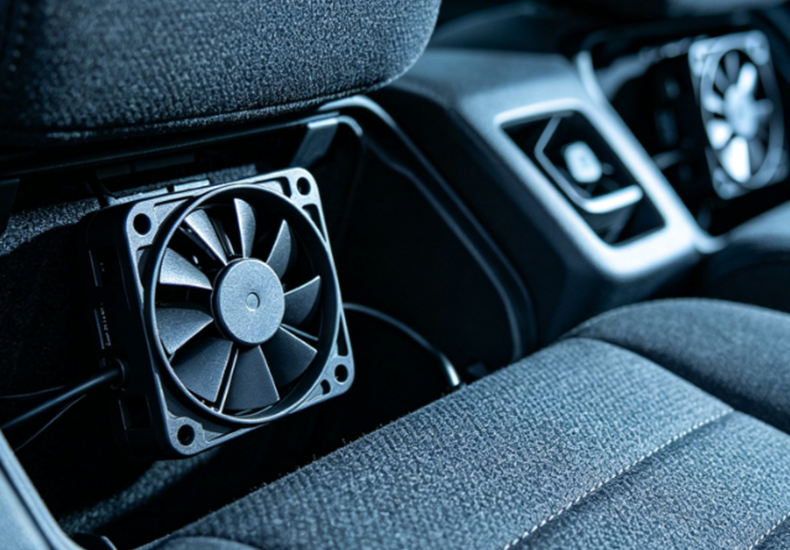
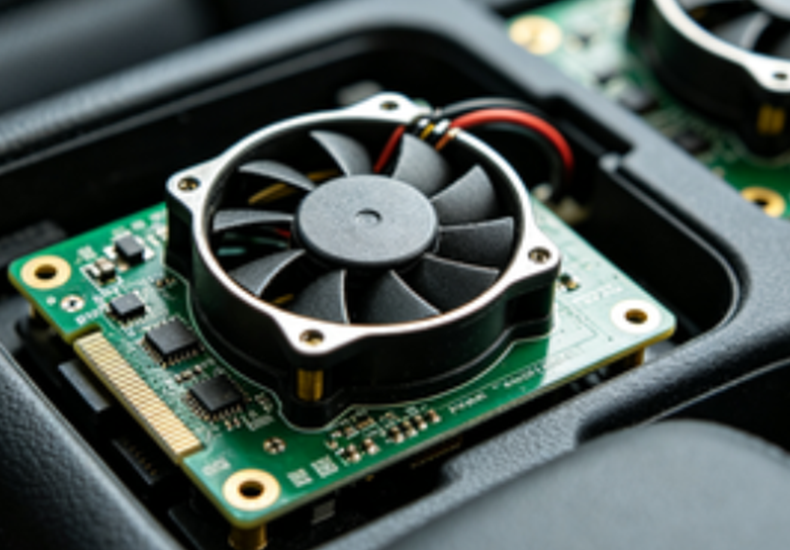
Inside an automotive seat, the available cavity is small and irregular. YCCFAN's designers are not dealing with an open airflow path. They are working around foam, trim layers, support structures, harness routing, and mechanical modules.
This means a generic blower that works in another enclosure may still be too thick, too wide, or poorly shaped for a seat frame. Even a minor mismatch can trigger bracket changes, foam redesign, or duct rework. For seat suppliers trying to control tooling time and validation cost, that quickly becomes a project problem, not just a component problem.
2.Airflow alone is not enough
Many buyers first ask for airflow, but seat ventilation performance depends on more than CFM. YCCFAN’s blower selection guidance explains that airflow tells you how much air a fan can move, while static pressure shows whether it can overcome resistance from seat materials or filters. In seat applications, static pressure becomes crucial because the air path is restrictive.
So a standard car seat cooling fan may meet nominal airflow targets in free-air testing and still deliver weak seat-level ventilation after installation. That is one of the most common reasons customers feel the airflow is “there but not effective.”
3.Noise becomes a seat-level issue
A blower near the seat occupant is judged more harshly than a fan hidden elsewhere in the vehicle. YCCFAN highlights low noise as a core goal for its seat ventilation blower,
For seat systems, noise is not only about dBA. It is also about tone, vibration transfer, and how the fan behaves across speed steps. A standard fan for car may meet basic airflow requirements but still fail the cabin comfort target because of buzz, hum, or structure-borne vibration.
What Look for in a Car Seat Cooling Fan
Once the limits of standard parts become clear, the next question is what matters most in selection. The answer is not one single spec. It is a package of thermal, electrical, acoustic, and durability requirements.
1.The most important performance parameters
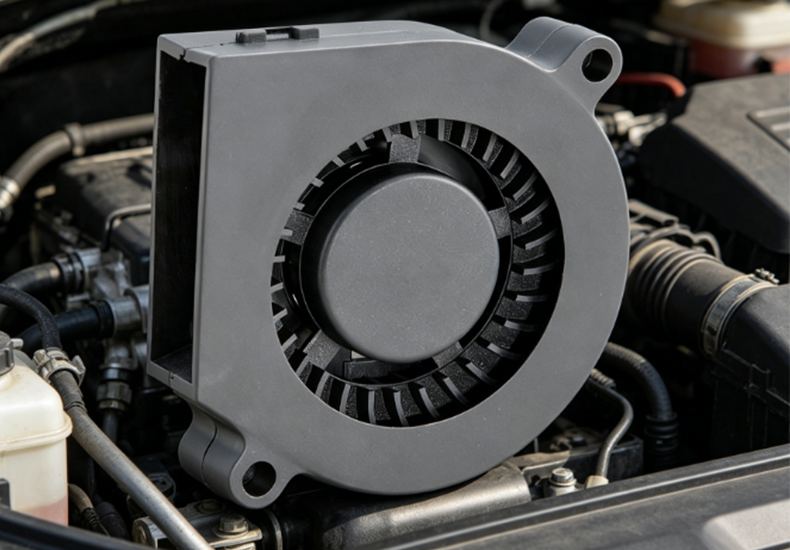
For a car seat cooling fan, buyers usually care about size, airflow, static pressure, acoustic performance, bearing system, operating temperature, and control method. Automotive blower products from YCCFAN, for example, YCCFAN’s DC5015F blower fan shows how these parameters are defined in practice, with a compact 52 × 51 × 15 mm structure, operating temperature from -10°C to +70°C, optional functions such as PWM and auto restart, and multiple 5 V, 12 V, and 24 V versions offering different airflow and static pressure levels for different project needs.
That spec logic reflects real project concerns. The fan must fit the seat cavity, push air through resistance, stay quiet near the passenger, and remain stable across wide automotive temperature conditions.
2.Why voltage, control, and interface details matter
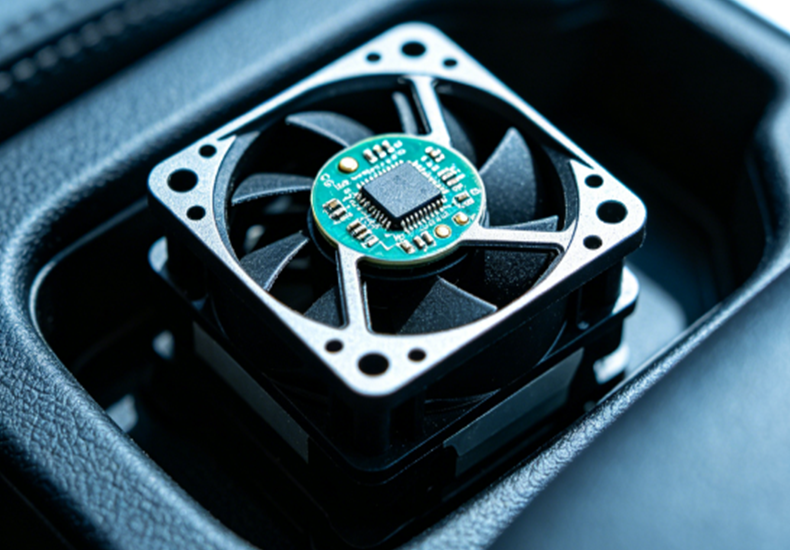
One pain point many projects underestimate is electrical compatibility. A fan may look suitable mechanically but still fail integration because the voltage window, PWM behavior, FG output, wire length, lead type, or connector style does not match the seat ECU or harness design.
3.Reliability targets for mass production
A seat ventilation fan is a long-life component. It must survive vibration, temperature swings, and repeated duty cycles over vehicle life. YCCFAN emphasizes wide temperature tolerance, anti-vibration design, low-noise operation, smart speed control, and long lifespan under continuous use as key considerations for automotive fans.
In other words, a car cooling fan for seat ventilation is not just a small blower. It is a reliability part that must hold performance over time, not only at the beginning of the program.
How a Custom Car Cooling Fan Improves Integration and Cost Control
A custom car cooling fan solve problems earlier in the development stage. Instead of forcing the seat structure to fit a standard fan, the YCCFAN's fan can be designed around the real installation space, airflow path, and electrical requirements of the seat system. This improves integration efficiency and reduces the risk of late design changes.
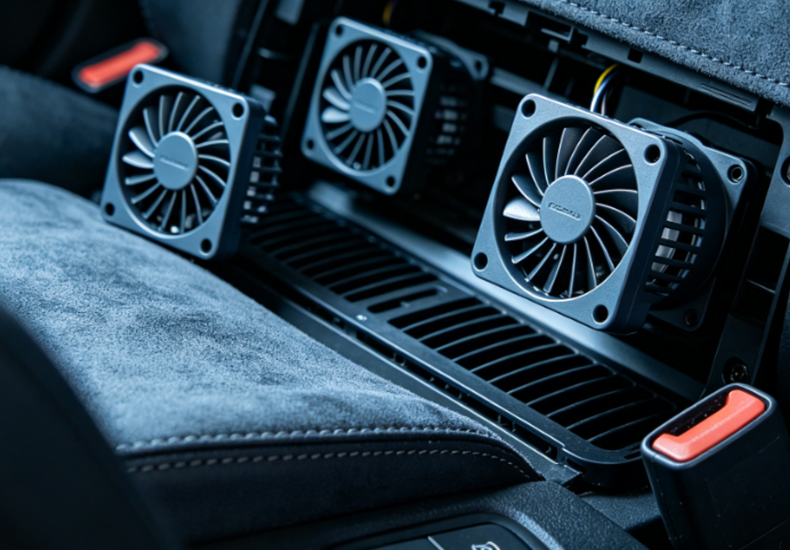
It also helps improve airflow performance under real working conditions, not just in free-air testing. By optimizing factors such as size, pressure performance, noise control, and interface matching, a custom fan for car seat can reduce redesign work, shorten validation cycles, and lower overall project cost for mass production.
How to Choose the Right Fan for Car Seat Ventilation Projects
Choosing the right fan for car seat ventilation projects starts with the actual application, not just catalog data. You need to look at installation space, airflow performance under resistance, noise level, voltage, control method, interface requirements, and expected service life. These factors determine whether the fan can fit smoothly into the seat system and perform reliably in mass production.
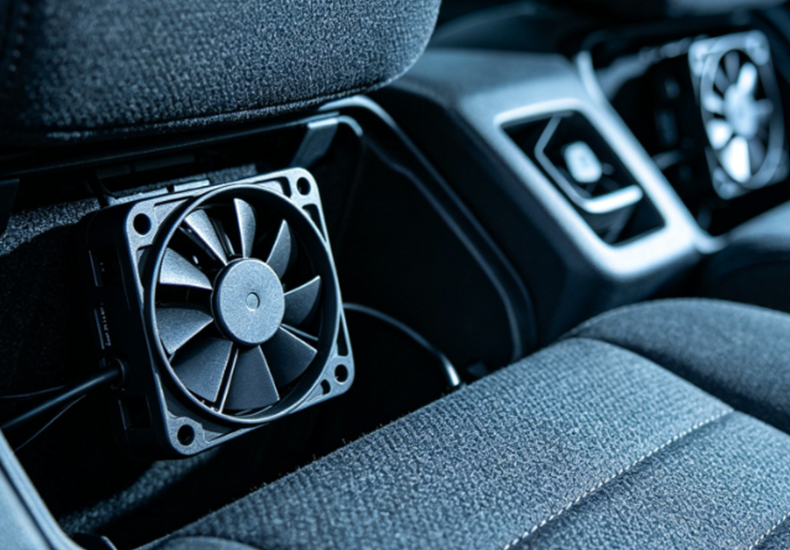
A custom solution is often the better choice when the project involves tight packaging, weak airflow, strict noise limits, or special electrical requirements. This is also why YCCFAN is worth considering. With strengths such as wide temperature tolerance, low-noise operation, vibration resistance, smart speed control, and long service life, YCCFAN can help customers develop a car seat cooling fan solution that improves integration efficiency and supports long-term automotive reliability.
Conclusion
If you are evaluating a new seat ventilation program or upgrading an existing design, choose a supplier that understands compact automotive cooling at the application level. Explore YCCFAN’s automotive cooling solutions and talk with YCCFAN about a custom seat ventilation fan for your next project.
Read more:
https://www.yccfan.com/articledetail/how-long-should-a-car-cooling-fan-stay-on.html
https://www.yccfan.com/articledetail/what-are-the-benefits-of-cooling-fans.html