



How to Reduce Heat Stress in Factories Using Industrial Cooling Fans
Factory heat stress isn’t only about high temperature—it’s about how heat builds up and how little air moves where people actually work. This guide explains what causes heat stress on the shop floor and how industrial cooling fans reduce the strain through airflow, smarter fan strategy, and practical placement—so comfort and safety improve without relying solely on HVAC.
What Causes Heat Stress in Factory Environments
Heat stress in factories is often caused by a combination of heat load and poor air circulation, rather than just high temperatures. On the shop floor, heat builds up from sources like machinery, motors, furnaces, lighting, tightly arranged equipment, and the physical effort of workers. When these factors accumulate in a specific area, workers can feel overheated, even if the temperature doesn't seem excessively high.
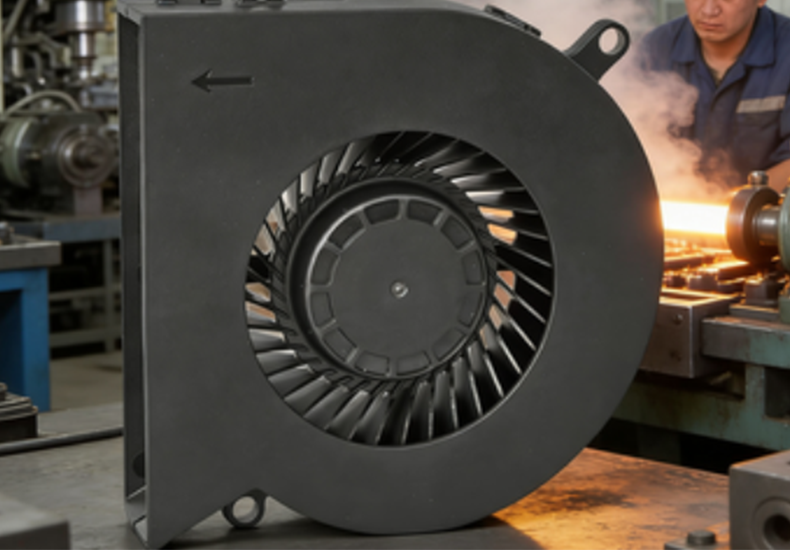
The issue becomes worse when the air is stagnant. Without sufficient airflow, sweat evaporates more slowly, making it harder for the body to cool itself. In many factories, this results in localized hot spots around workstations or behind equipment. High humidity further amplifies discomfort and fatigue, increasing safety risks and lowering productivity.
How Industrial Cooling Fans Reduce Heat Stress
Industrial cooling fans reduce heat stress mainly by increasing air movement around workers, rather than lowering the air temperature the way HVAC does. That added airflow helps the body release heat more effectively, so people feel noticeably more comfortable—and stay safer—even when the factory temperature remains high.
1.Wind-Chill Effect and Sweat Evaporation
When airflow increases, sweat evaporates faster, and evaporation is what removes heat from the skin. On a real production floor, the benefit is easy to see: after physically demanding tasks, workers cool down faster during short pauses, and hot, humid areas feel less heavy and “clingy.”
2.Impact on Worker Comfort and Safety
Stronger airflow lowers the perceived temperature and reduces how hard the body has to work to stay cool. In practice, this often translates into fewer heat-related symptoms, more consistent focus, and better stamina across long shifts—especially in summer months or near equipment that continuously radiates heat.
Quick Comparison Table—Cooling Fan Industrial Options for Factory Heat Stress
Solution | Best Use | Strength | Common Mistake |
HVLS fans | Large open floors | Whole-area circulation, destratification | Too few units for coverage |
Portable / high-velocity fans | Hot workstations | Fast, local relief | Used alone without base circulation |
Wall-mounted fans | Ventilation/exhaust | Moves hot air out, supports crossflow | Poor intake/make-up air planning |
Evaporative coolers | Open/semi-open sites | Lowers incoming air temperature | Used in sealed, high-humidity areas |
Key Cooling Fan Industrial Strategies for Reducing Heat Stress in Factories
The most effective way to reduce heat stress is rarely a single solution. In real factory environments, the best results usually come from combining area-wide air circulation, targeted spot cooling, and active heat removal. Large open floors and localized hotspots behave very differently, so using the right cooling fan strategy in each zone is far more effective than relying on one fan type alone.
1.HVLS Fans for Large-Area Air Circulation
HVLS fans are designed to move large volumes of air slowly across wide areas, helping break up heat stratification and eliminate stagnant zones near the floor. They’re well suited for warehouses, production halls, and assembly areas where consistent comfort is needed across a broad footprint. In many factories, HVLS fans are installed first because they improve overall conditions without creating strong drafts or excessive noise.
2.Spot Cooling with Portable or High-Velocity Fans
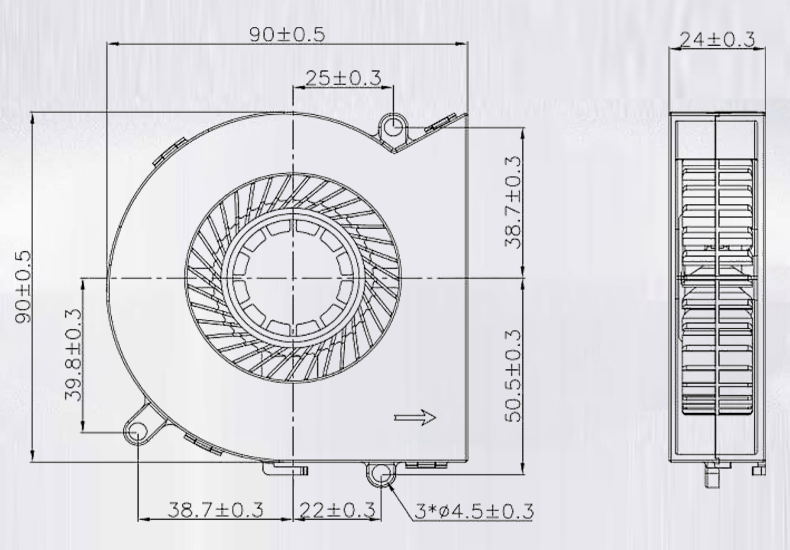
When heat exposure is concentrated—such as at welding cells, packaging lines, dock doors, or inspection stations—portable or high-velocity cooling fans provide fast, localized relief. By directing airflow straight into the work zone, they help workers cool down more quickly. In practice, spot cooling works best when paired with general air circulation; on its own, it can leave nearby areas feeling hot and uneven.
3.Wall-Mounted Cooling Fans for Ventilation and Exhaust
Wall-mounted cooling fans are effective for moving built-up heat out of long bays or enclosed sections of the factory and supporting cross-ventilation. They’re especially useful where warm air collects near walls or ceilings. To get real benefit, fresh make-up air must be able to enter from the right location—otherwise, the system may simply recirculate warm air instead of removing it.
4.Evaporative Air Coolers for Ambient Temperature Reduction
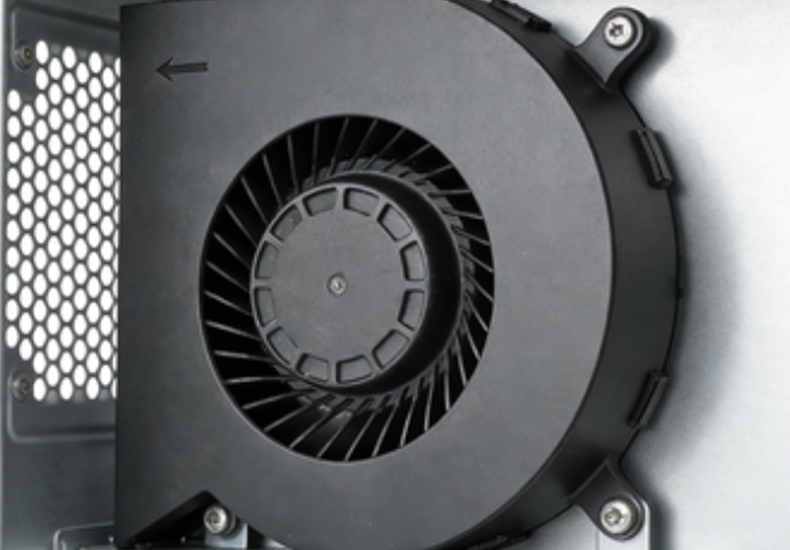
Evaporative coolers lower incoming air temperature through evaporation and typically use less energy than traditional air conditioning. They perform best in open or semi-open factory layouts where air can flow through the space. In tightly sealed buildings or high-humidity conditions, their cooling effect can be limited and added moisture may affect comfort or processes.
Strategic Fan Placement for Maximum Heat Stress Reduction
Fan placement often has as much impact as fan size or airflow rating. Even a powerful cooling fan can fall short if air doesn’t reach the work zone or if airflow loops back before doing useful work.
1.Creating Cross-Breezes Across the Factory Floor
Arrange fans so air moves through active work areas in a clear, continuous path. This helps prevent dead spots behind equipment, storage racks, or partitions. In many real-world layouts, the biggest improvements come from aligning airflow with how people actually move and work—not just where open floor space happens to be.
2.Managing Airflow Direction and Height
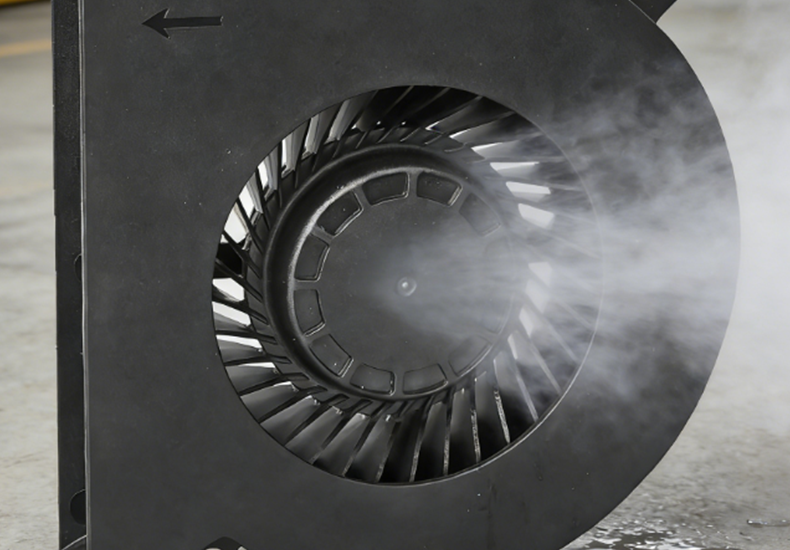
Direct airflow down to worker level instead of allowing it to stay trapped overhead. Avoid placing intakes and exhausts too close together, which can cause airflow to short-circuit without cooling occupied zones. Often, small changes in mounting height or fan angle can make airflow feel significantly more effective—without adding more fans or increasing power use.
Preventative Maintenance to Keep Industrial Cooling Fans Effective
When a industrial cooling fan fails during a heat wave, the impact goes beyond comfort—it can quickly turn into a safety concern. During extreme heat, airflow is often the main defense against heat stress, so any drop in ventilation can raise risk levels in a short time.
1.Cleaning and Airflow Maintenance
Regular cleaning is one of the most effective ways to keep cooling performance consistent. Dust on blades or guards disrupts airflow, while blocked intakes or nearby clutter increase load and reduce the amount of air reaching work areas. In everyday factory maintenance, simply restoring a clear airflow path often delivers a bigger improvement than adjusting fan settings or adding extra units.
2.Reliability During Peak Heat Periods
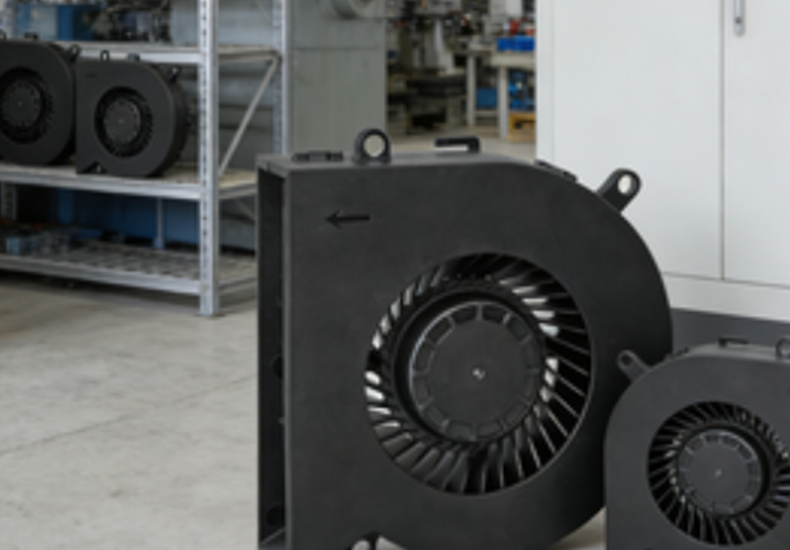
Fans work hardest when temperatures are highest—long operating hours, hotter ambient air, and heavier demand all come together. Carrying out basic inspections and cleaning before peak summer conditions helps avoid in-season failures, when downtime is hardest to manage and cooling demand leaves little margin for error.
Benefits of Using Industrial Cooling Fans to Reduce Heat Stress
Industrial cooling fans offer a practical balance of safety, comfort, and cost efficiency. While they don’t replace every HVAC solution, they often deliver the greatest benefit per investment when the goal is easing heat strain in active work zones.
1.Worker Safety and Health
Improved air movement supports the body’s natural cooling process, lowering the likelihood of heat exhaustion and related incidents. In real operations, better airflow also helps reduce fatigue, which can lead to steadier focus and safer behavior—especially during long shifts or near heat-generating equipment.
2.Operational and Energy Cost Savings
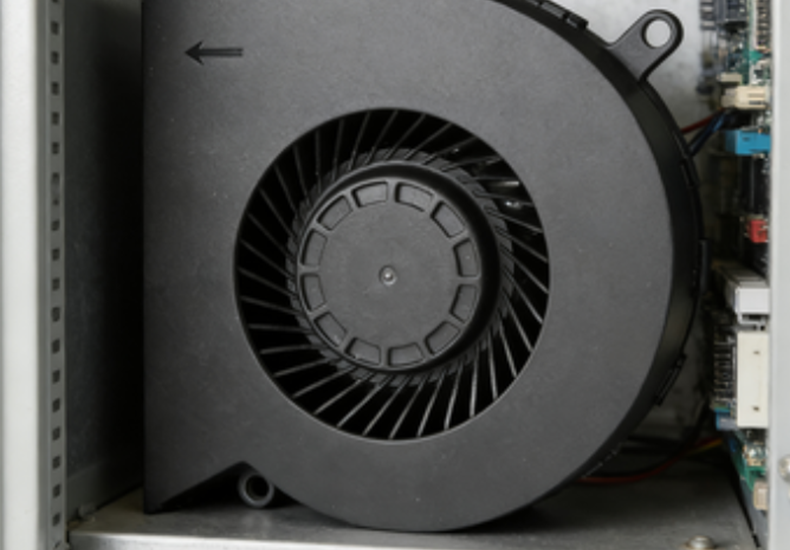
Compared with full building air conditioning, fans are far less expensive to install and run. Their flexibility allows facilities to scale cooling where it’s needed most—using broad circulation for large areas and spot cooling for hot tasks—rather than relying on a single, high-cost system.
3.Moisture and Condensation Control
Consistent air movement can also help manage floor moisture by speeding evaporation and keeping surface conditions more even. In some factories, this reduces issues like sweating concrete slabs and improves traction, adding another layer of safety in walkways and work zones.
Read more:
https://www.yccfan.com/articledetail/why-are-blower-fans-so-loud.html
Conclusion
Reducing heat stress in factories comes down to one core idea: keep air moving where the heat and people are. By combining wide-area circulation (like HVLS), spot cooling for hotspots, ventilation/exhaust where heat accumulates, and solid maintenance, industrial cooling fans can deliver safer working conditions, steadier productivity, and lower operating cost—especially during peak summer demand.


