





How Waterproof Cooling Fans Enhance Thermal Management in EV Chargers
In this guide, we break down how waterproof cooling fans (IP55–IP68) keep airflow stable in harsh environments, reduce derating and shutdown risk, and extend the service life of high-power chargers through smarter protection and control.
Why Thermal Management Is Critical in EV Chargers
1.High Power Density and Heat Generation
Fast and ultra-fast EV charging produces a lot of heat in a short time, so the charger’s thermal load can rise quickly. High charging currents, heat-sensitive power devices such as IGBTs and MOSFETs, and compact enclosure layouts haall contribute to rapid temperature buildup. If the heat isn’t removed efficiently, the system may start to derate power, reduce charging speed, or shut down to protect critical components.
2.Outdoor Installation Challenges
Most EV chargers operate outdoors, which means the cooling system has to work reliably in real weather—not just in ideal lab conditions. Rain, snow, dust, humidity, and large day–night temperature swings can all interfere with airflow, accelerate wear, and increase failure risk. In practice, keeping stable heat dissipation under these conditions is a core design requirement, not a“nice-to-have.”
What Is a Waterproof Cooling Fan?
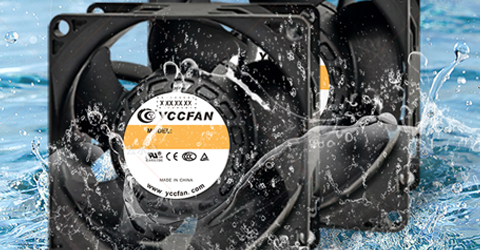
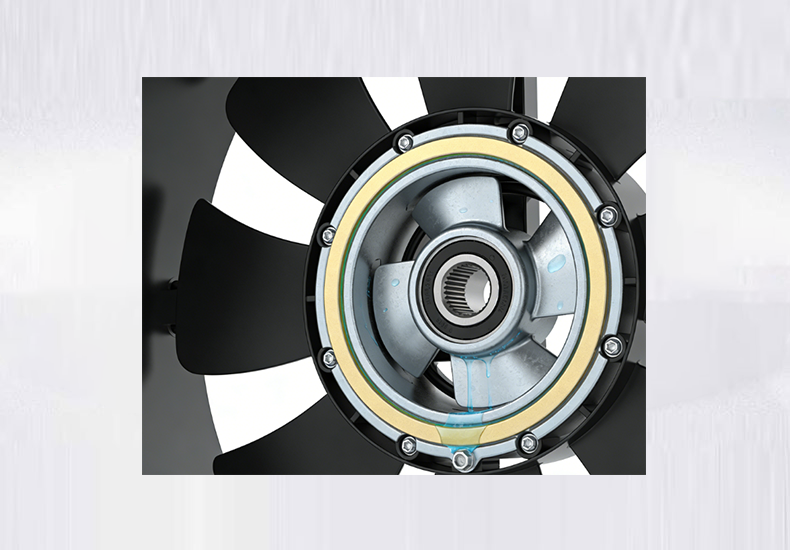
A waterproof cooling fanis designed to operate reliably in wet, dusty, and corrosive environments. Its sealed structure and protective materials help keep airflow stable even when exposed to rain, moisture, or airborne contaminants.
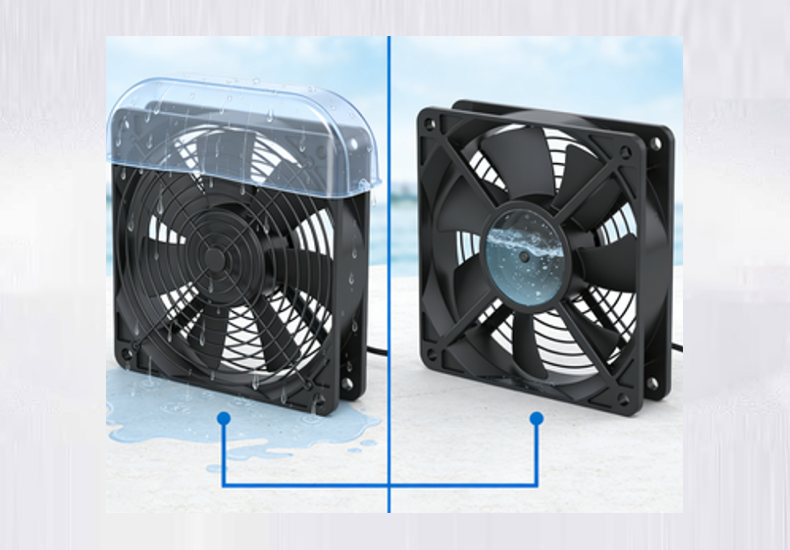
IP Ratings Explained (IP55 vs IP68)
IP ratings define how well a cooling fan resists dust and water ingress.
IP Rating | Dust Protection | Water Protection | Typical EV Charger Use |
IP55 | Dust-protected | Water jets | Semi-outdoor chargers |
IP65 | Dust-tight | Water jets | Outdoor fast chargers |
IP68 | Dust-tight | Continuous immersion | Coastal / extreme sites |
How Waterproof Industrial Cooling Fans Enhance EV Charger Thermal Management
1.Reliable Performance in Harsh Environments
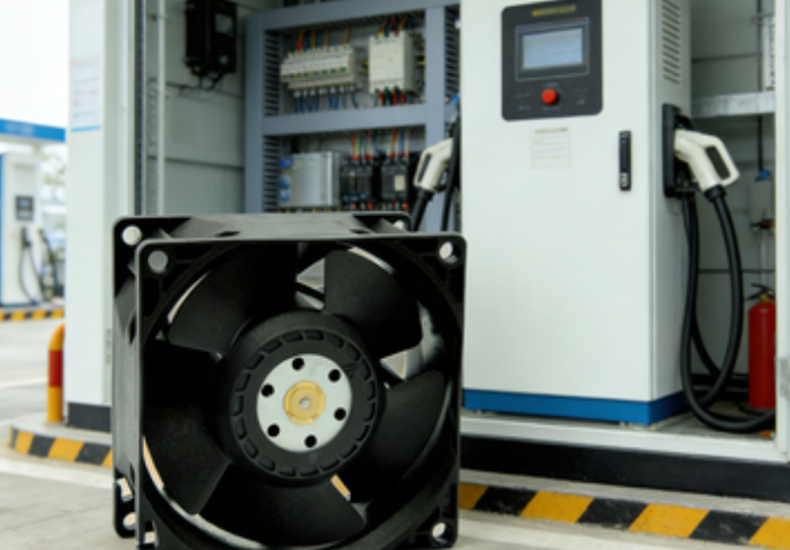
For outdoor EV chargers, the biggest risk is not heat itself but a loss of cooling when conditions turn harsh. Waterproof industrial cooling fans are designed to keep running in rain, snow, and high-humidity environments, ensuring airflow does not stop when weather changes. In real installations, this continuous cooling helps prevent sudden temperature rise, power derating, or charger shutdown caused by fan failure.
2.Prevent Overheating in High-Output Chargers
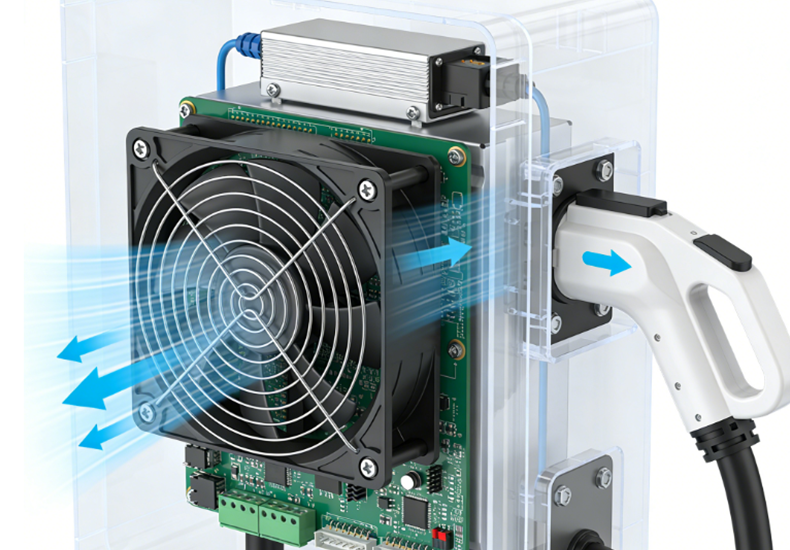
Fast and high-power chargers generate intense, localized heat, especially around power modules and heat sinks. During rapid charging, temperatures can climb quickly if airflow becomes unstable. Waterproof cooling fans provide consistent airflow under high load, helping remove heat efficiently and keep critical components within safe operating ranges.
3.Corrosion Resistance for Long-Term Operation
In many field deployments, cooling issues develop gradually due to moisture, salt air, or airborne contaminants rather than sudden failure. Corrosion-resistant materials—such as treated metals, sealed bearings, and high-grade plastics—allow waterproof cooling fans to maintain performance in coastal, humid, or industrial environments, reducing long-term degradation and maintenance frequency.
4.IP-Rated Protection for Electronics Safety
High IP ratings do more than protect the fan itself—they help prevent water and dust from entering the charger enclosure through airflow paths. By limiting ingress, waterproof industrial cooling fans reduce the risk of short circuits, insulation breakdown, and random faults, improving overall system safety and operational stability.
5.Intelligent Speed Control (PWM)
EV chargers rarely operate at full power all the time, so fixed-speed cooling is often inefficient. Many waterproof cooling fans support PWM speed control, allowing airflow to scale with internal temperature. In practice, this means lower power consumption and reduced noise at light load, while still delivering strong cooling when charging demand increases.
Typical Applications of Waterproof DC Cooling Fans in EV Chargers
1.Public Outdoor Charging Stations
Outdoor chargers live in the real world—rain, road dust, pollen, and exhaust residue all end up around vents and airflow paths. Street-side units often see wind-blown water and grit; parking-lot chargers deal with heat radiating off asphalt plus seasonal debris; and highway sites run long hours with minimal downtime. In practice, waterproof cooling fans help keep airflow steady through these conditions, which reduces unnecessary power derating and cuts service visits caused by moisture or contamination issues.
2.High-Power DC Fast Chargers
At 60 kW, 120 kW, or 240 kW, heat builds fast and tends to concentrate around power stages, heat sinks, and connector-related areas. When chargers handle back-to-back sessions, even a small drop in airflow can push temperatures into derating territory. Waterproof dc cooling fans are commonly used to maintain consistent air movement under high load, and they also work well in hybrid liquid + air designs—where dc fans still play a key role moving air across radiators and internal hot zones.
3.Coastal and High-Humidity Installations
Coastal and high-humidity locations are where standard fans often degrade sooner than expected. Salt-laden air, condensation cycles, and fine particles can gradually lead to corrosion, bearing noise, and reduced airflow. Waterproof cooling fans with sealed construction and corrosion-resistant materials are often selected for seaside cities, tropical climates, and industrial areas, helping chargers stay stable for longer and extending maintenance intervals.
Comparison — Waterproof DC Fan vs Standard Cooling Fan
Feature | Waterproof Cooling Fan | Standard Cooling Fan |
Outdoor Suitability | Excellent | Limited |
Water & Dust Protection | IP55–IP68 | Low or none |
Corrosion Resistance | High | Low |
Maintenance Frequency | Low | High |
EV Charger Reliability | High | Reduced |
Key Benefits of Waterproof Cooling Fans for EV Charging Infrastructure
1.Improved Charger Reliability
At high charging power, temperatures can climb fast, so cooling needs to stay steady. Waterproof cooling fans maintain consistent airflow under peak load, helping reduce unexpected derating and lowering the risk of heat-related shutdowns.
2.Reduced Maintenance Costs
Outdoor installations expose fans to moisture, dust, and debris—common causes of early wear and service calls. With sealed construction and corrosion-resistant materials, waterproof cooling fans are better protected from these issues, which helps extend replacement intervals and reduce maintenance effort.
3.Extended Charger Lifespan
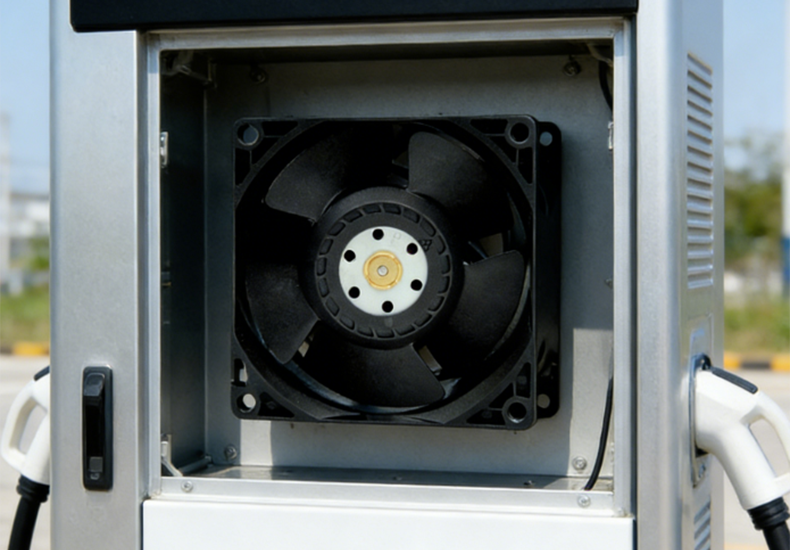
Stable temperature control is one of the most effective ways to protect power electronics over time. By supporting more consistent cooling, waterproof dc fans help reduce heat stress on modules, connectors, and internal components, improving long-term durability.
4.24/7 Operation Readiness
Charging infrastructure is expected to run continuously in all weather conditions. Waterproof cooling fans are designed for unattended, long-hour operation, helping chargers stay online with fewer interruptions and less need for routine on-site checks.
FAQ
1) How do fans help to reduce heat stress?
They remove heat and stabilize temperature. By moving air across hot components and heat sinks, fans reduce hotspots and temperature swings that accelerate wear.
2) How waterproof are EV chargers?
It depends on the enclosure’s IP rating. Many outdoor EV chargers use weather-sealed designs (commonly IP54–IP65), while specific parts may use higher protection depending on the site and design.
3) What is a thermal management system in EV?
It’s the system that keeps key components within a safe temperature range. It manages heat in batteries, power electronics, and motors using cooling methods like liquid loops, heat exchangers, and airflow control.
4) How does a cooling fan improve EV charger reliability?
A cooling fan keeps airflow consistent under load. It helps prevent overheating, reduces power derating, and lowers the chance of heat-triggered shutdowns during fast charging.
5) What should I look for in a cooling fan for outdoor EV chargers?
Choose protection and control that match the site. Look for suitable IP rating, corrosion resistance, stable airflow/pressure, and PWM speed control for efficient, quieter operation.
Read more:
https://www.yccfan.com/articledetail/what-is-the-role-of-dc-blower-fans-in-office-equipment.html
https://www.yccfan.com/articledetail/what-are-the-applications-of-temperature-controlled-dc-fan.html
Conclusion
In short, choosing the right waterproof cooling fan is one of the most practical ways to improve charger uptime, durability, and total operating cost.


