




How to Choose A Server Fan
Choosing the right server fan starts with the airflow path inside the chassis, not with maximum RPM or free-air CFM alone. Dense heatsinks, GPU cards, storage devices, air baffles and narrow exhaust paths create resistance, so the fan must maintain enough airflow at the pressure produced by the actual system.
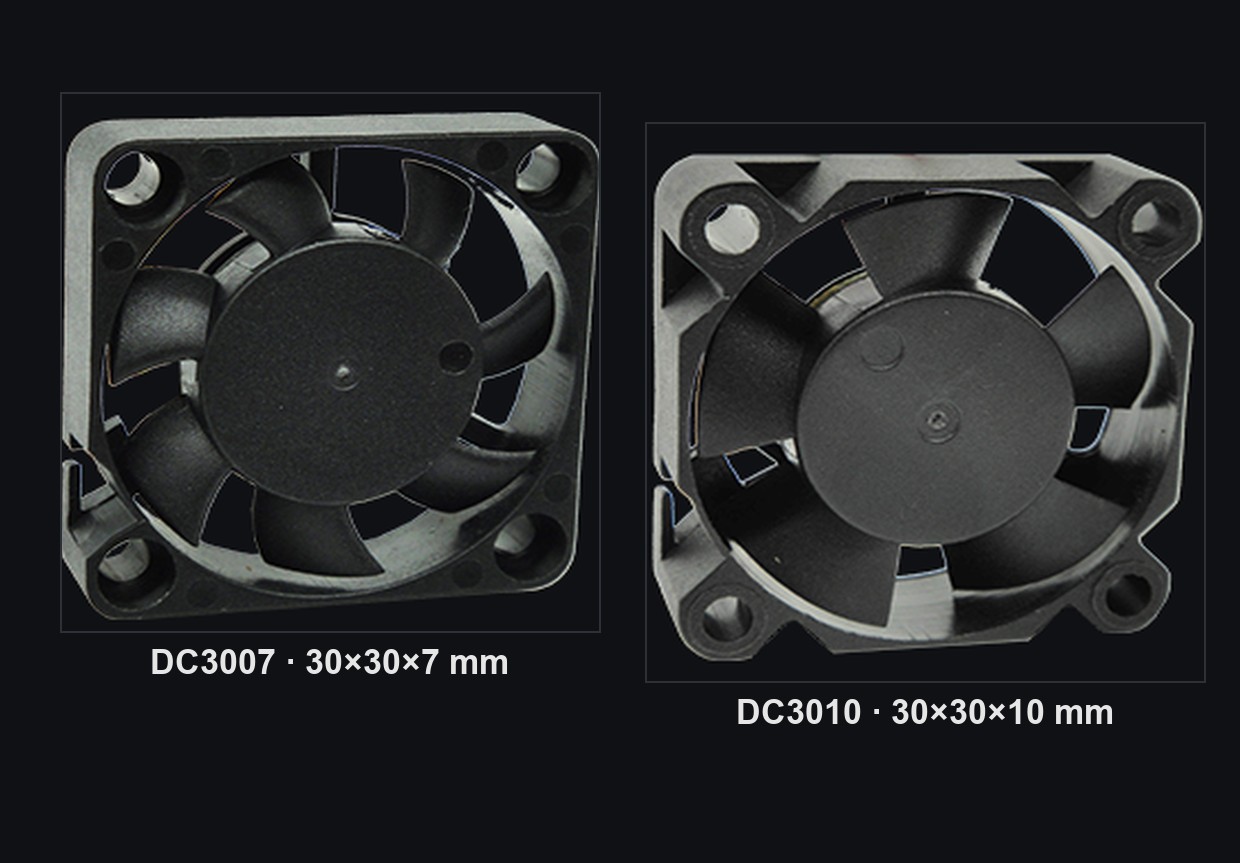
Physical size is equally important. A compact server may only provide space for a 40mm fan, while another chassis can accommodate a deeper or larger frame. Voltage, current, noise and control functions such as PWM, FG or RD must then be checked against the server or equipment controller.
YCCFAN provides compact high-pressure DC fan options for restrictive electronic cooling paths. Models such as DC4028F, DC4028G and DC4056G show how fans with similar frame widths can provide very different airflow, pressure and RPM ranges.
The correct fan should therefore be selected from the required operating point, available installation space and electrical interface rather than the highest RPM specification alone.
Server Fan vs. Server Fan Module vs. Rack Cooling Unit
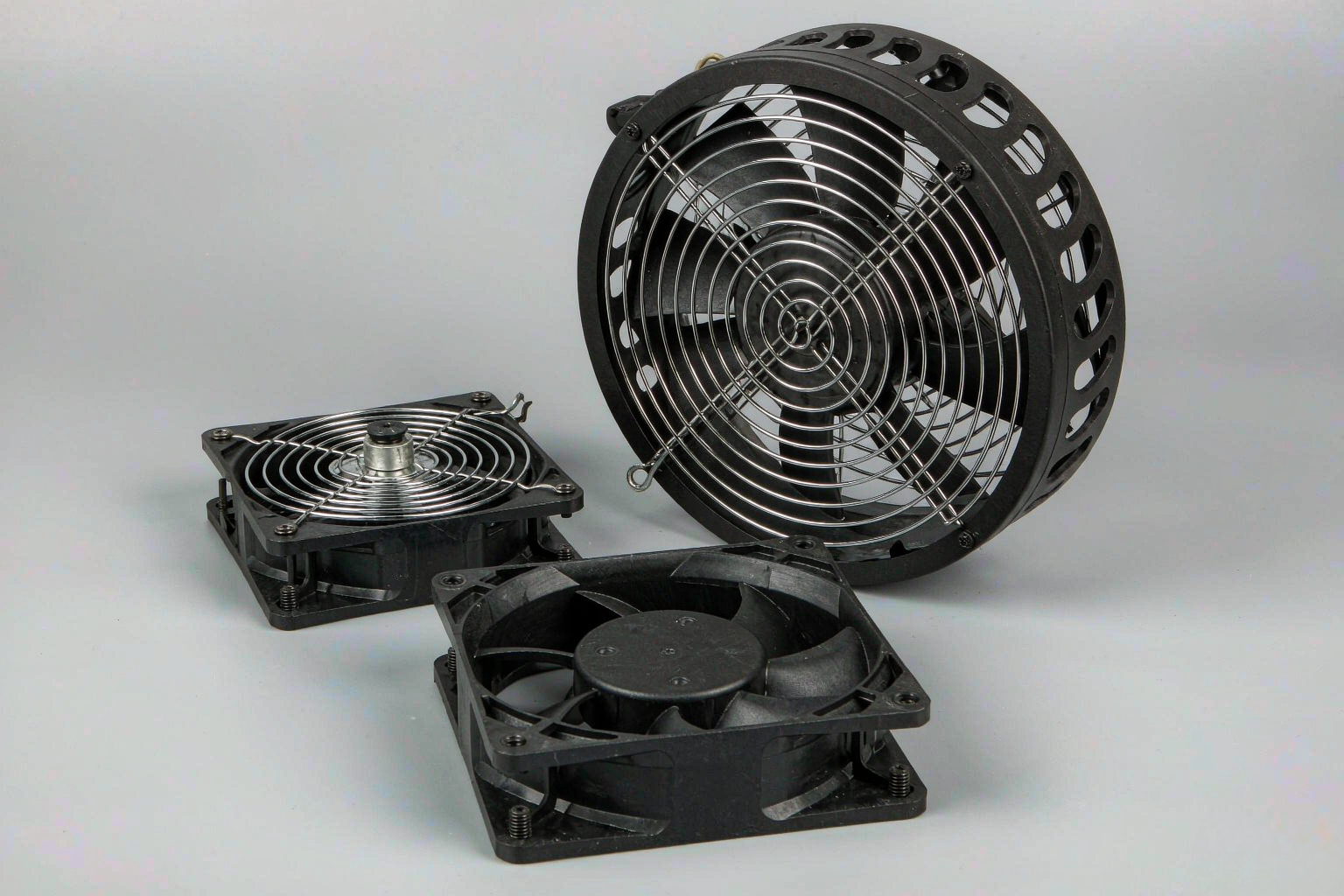
The term server cooling fan can refer to different types of cooling hardware, so the product type should be clarified before comparing specifications.
A server fan is the individual axial or centrifugal fan used inside a server, storage system, network appliance or other high-density electronic chassis. Its main selection parameters include physical size, airflow, static pressure, voltage, current and control functions.
A server fan module may include the fan together with a housing, connector, latch, handle, hot-swap structure or additional electronics. Features such as FRU identification, status LEDs and proprietary connectors may belong to this complete module rather than to the fan itself.
A rack cooling unit is different again. It is usually a separate fan panel or ventilation device installed in a rack or cabinet to move air through the enclosure rather than directly through the internal server hardware.
This guide focuses primarily on internal server and OEM chassis fan selection.
If a project requires a centrifugal airflow path rather than an axial through-flow design, a server blower fan may be evaluated separately according to the required outlet direction and pressure characteristics.

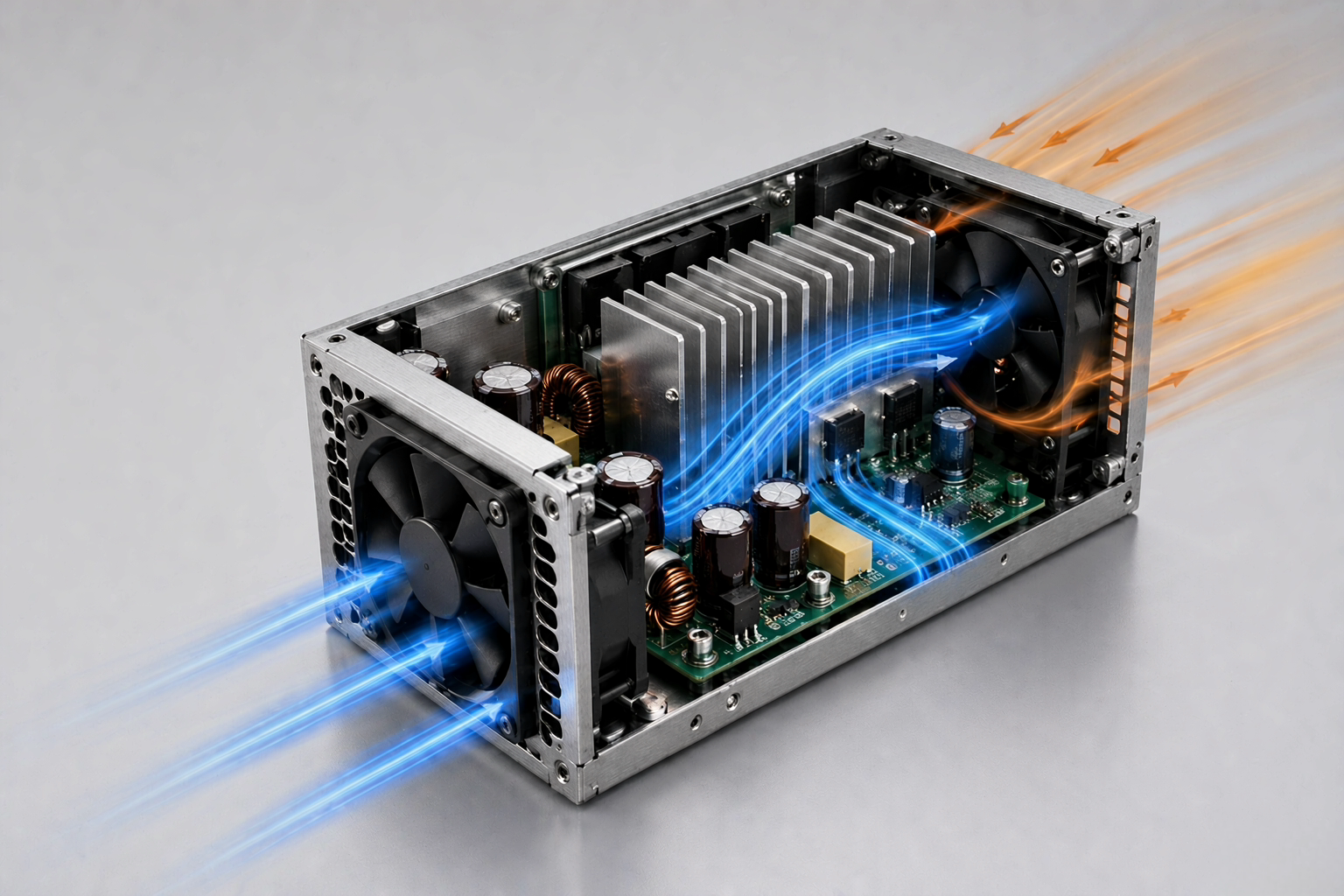
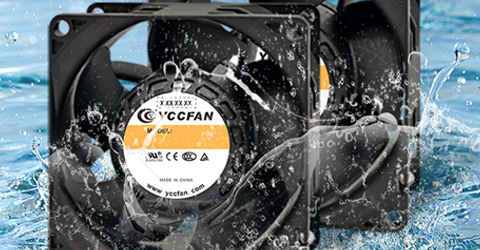
A compact high-pressure fan moves air through a densely populated electronic assembly, where heat sinks, components and narrow passages increase airflow resistance.
Quick Server Fan Selection Factors
| Selection Factor | What to Check |
|---|---|
| Fan Size | Confirm frame width, height, depth, mounting points and available space inside the chassis. |
| Static Pressure | Evaluate how much airflow remains after resistance from heatsinks, GPU cards, grilles and internal structures is added. |
| Airflow | Compare the airflow required at the expected system pressure rather than maximum free-air CFM alone. |
| RPM | Treat speed as one performance parameter, not as the sole indicator of cooling capability. |
| Voltage & Current | Match the system power supply and confirm the fan header or power circuit can support the selected configuration. |
| PWM Control | Confirm the exact PWM requirements of both the fan and the controller. |
| FG / RD Feedback | Determine whether RPM monitoring or rotation-failure detection is required. |
| Connector & Pinout | Verify the actual connector and pin assignment rather than assuming compatibility from wire count. |
For an OEM server or high-density electronic cooling project, these factors should be evaluated together. Selecting a fan from frame size, RPM or maximum airflow alone can result in insufficient airflow once the fan is installed in a restrictive chassis.
YCCFAN Server Cooling Fan Options
| Model | Size | Voltage | Max Airflow | Max Static Pressure | Max Speed | Selection Direction |
|---|---|---|---|---|---|---|
| DC4028F | 40×40×28mm | 12V / 24V | 26.50 CFM | 39.94 mmH₂O | 16,000 RPM | Compact high-load cooling where a 28mm-deep frame and stronger airflow/pressure are required |
| DC4028G | 40×40×28mm | 12V / 24V | 30.48 CFM | 96.96 mmH₂O | 25,000 RPM | The same 40×28mm envelope when substantially higher pressure capability is required |
| DC4056G | 40×40×56mm | 12V | 43.70 CFM | 161.38 mmH₂O | Up to 25,500 RPM | Deeper installations requiring very high pressure through highly restrictive airflow paths |
These models should not be treated as a simple good-better-best ranking. The correct option depends on available installation depth, supply voltage, required airflow at the system operating pressure, acoustic requirements and electrical interface.
DC4028F and DC4028G are particularly useful for comparison because both use a 40×40×28mm frame but provide very different pressure ranges. This demonstrates why server fan size alone does not determine cooling performance.
DC4056G uses the same 40mm frame width but increases the depth to 56mm, allowing substantially higher pressure capability for highly restrictive cooling paths.
The final model should be selected from its P-Q curve and the expected system resistance rather than from maximum values alone.

YCCFAN DC4028F: a 40 × 40 × 28 mm compact high-pressure fan, an example of the compact frame class used for internal server and high-density electronic cooling.
See YCCFAN Cooling Fans in Action
See the YCCFAN cooling fan video below as an additional product reference. Final server fan selection should still be based on the required P-Q operating point, electrical interface and validation in the actual chassis.
Start with Server Fan Size and the Airflow Path
Server fan size should be selected from the available chassis space and airflow path rather than rack height alone.
Compact server designs may require 40mm-class fans, while larger chassis can accommodate larger frame sizes. Width, height, depth, mounting points, cable clearance and airflow direction should all be confirmed before performance is compared.
The internal airflow path then determines how much resistance the fan must overcome. Dense heatsinks, GPU cards, storage cages, restrictive grilles, filters, air baffles and cable placement can all increase pressure loss.
For this reason, chassis labels such as 1U, 2U or 4U should not be assigned a universal airflow or static-pressure target.
Two 1U servers can have very different operating points if one contains relatively open components while another uses dense accelerator cards, restrictive heatsinks or a heavily populated storage layout.
First establish:
- available fan dimensions,
- expected airflow path,
- major restrictions,
- heat load,
- supply voltage,
- and required control interface.
Then compare suitable fan curves.
Why Static Pressure Matters in Server Fan Selection
Maximum airflow describes one endpoint of fan performance, but a server does not operate in a zero-resistance environment.
As air passes through heatsinks, GPU assemblies, drive cages, filters and narrow passages, pressure loss increases and the available airflow falls.
Static pressure therefore becomes particularly important in compact and high-density systems.
The useful question is not simply:
“Which server fan has the highest CFM?”
A more useful question is:
“How much airflow can this fan maintain at the pressure created by my chassis?”
The operating point is where the fan’s P-Q curve intersects the resistance of the system.
This is why a lower-CFM fan with stronger pressure performance may sometimes maintain more useful airflow in a highly restrictive path than another fan with a higher free-air CFM rating.
Does Higher RPM Mean a Better Server Fan?
A high RPM server fan can provide greater airflow or static-pressure capability, but RPM alone does not determine whether the fan is suitable for a server.
Blade geometry, motor design, frame depth and the complete fan structure also affect airflow, pressure, noise and power consumption.
For example, YCCFAN server-oriented fan models cover different speed and pressure ranges, but the highest-speed model should not automatically be treated as the best option.
A 25,000 RPM fan may be useful in an extremely restrictive cooling path, while another system may meet its thermal requirement at a lower speed with lower noise and current draw.
Use server fan RPM as one performance parameter. Final selection should be based on the required P-Q operating point and the thermal behavior of the complete chassis.
How to Read Server Fan Airflow and Static Pressure Data
Maximum airflow and maximum static pressure are useful specification endpoints, but they do not occur at the same operating condition.
Maximum airflow represents the low-pressure end of the P-Q curve, while maximum static pressure represents the zero-flow or near-zero-flow end.
A server normally operates somewhere between these two endpoints.
For example, the YCCFAN DC4028G is currently listed with up to 30.48 CFM maximum airflow and 96.96 mmH₂O maximum static pressure.
These two figures describe different ends of its performance curve. They do not mean the fan delivers 30.48 CFM while simultaneously operating at 96.96 mmH₂O.
The relevant P-Q curve should therefore be compared with the expected resistance of the server or chassis to identify the practical operating point.
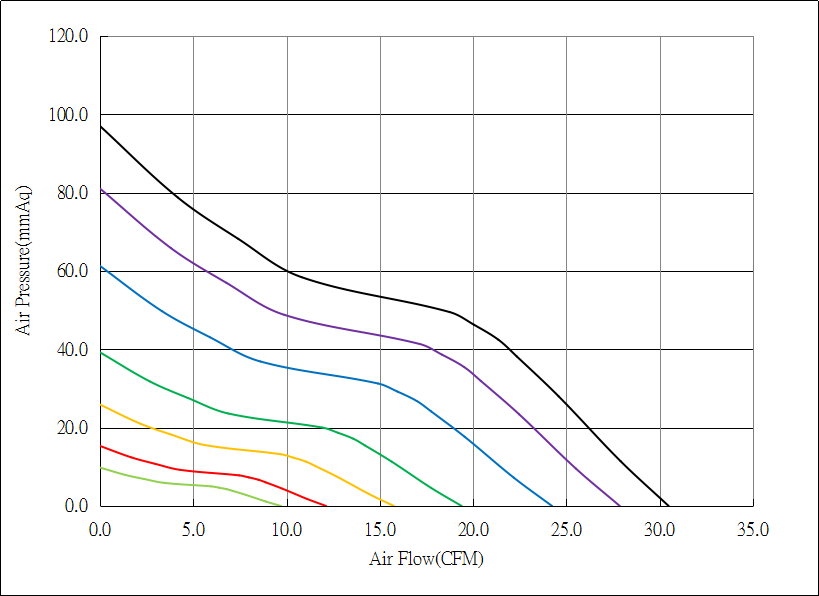
YCCFAN DC4028G airflow and static pressure (P-Q) curve. The fan’s practical operating point is where this curve meets the system resistance, not at either maximum endpoint.
For engineering projects, also confirm the measurement conditions associated with the exact datasheet or test report. If the public product page does not provide enough detail about the test setup, request the relevant performance data before treating a maximum specification as a design guarantee.
To go deeper on how airflow and pressure behave together in a real cooling system, see the related guide on fans in series vs parallel: airflow vs static pressure.
PWM, FG and RD: Know the Function Boundaries
Server fan integration may require more than power and ground.
Depending on the project, the controller may need speed control, RPM feedback or fault detection.
YCCFAN models such as DC4028F can support optional PWM, FG and RD functions according to the required configuration.
PWM is used as a speed-control input.
FG provides a frequency or tachometer feedback signal that can be used to monitor fan rotation or speed.
RD provides a rotation-detection or alarm-type output that can be used to identify abnormal or locked operation.
However, the presence of these functions does not automatically guarantee compatibility with every server motherboard, BMC or controller.
Before approving a fan, confirm the exact requirements for:
- connector and pinout;
- PWM electrical specification;
- PWM frequency;
- duty-cycle versus speed behavior;
- minimum starting duty;
- FG pulses per revolution;
- signal voltage and pull-up requirements;
- fan behavior if the control signal is missing;
- RD or failure-alarm logic.
Only publish exact values when they are confirmed in the datasheet for the exact YCCFAN model being supplied.
For more detail on how wire count relates to power, speed and PWM signals, see 2-wire vs 3-wire vs 4-wire DC fans.
Check Electrical and Mechanical Compatibility
A replacement or OEM server fan must match both the thermal requirement and the hardware interface.
First confirm the mechanical envelope, including frame width, height, depth, mounting points, inlet and outlet clearance and airflow direction.
A 40mm fan should not be assumed interchangeable with another 40mm fan simply because their front frame dimensions appear similar. Depth, mounting structure, connector position and performance can differ substantially.
Next confirm rated voltage, current and power capacity. High-speed and high-pressure fans can draw significantly more current than lower-speed models in the same frame size, so the fan header or power distribution circuit must support the selected configuration.
Connector type and pin assignment should also be verified from the actual server design rather than inferred from wire count alone.
If the server uses a hot-swappable tray, latch, handle, FRU identification, status LED or proprietary connector, treat those as requirements of the complete server fan module.
The distinction should remain clear:
PWM, FG and RD can be fan-level electrical functions.
Hot-swap structures, FRU IDs, LEDs and proprietary trays may be system- or module-level requirements.
Reliability, Noise and Operating Environment
Server fans may operate for extended periods and at relatively high speeds, but reliability should not be reduced to a generic lifetime or MTBF number.
If lifetime is an important purchasing requirement, compare data for the exact fan model together with the corresponding bearing type, operating temperature, RPM and test conditions.
Do not compare L10 or MTBF values measured under different conditions as if they were directly equivalent.
Noise should also be evaluated at the operating condition required by the actual system. Compact high-pressure fans often run at higher rotational speeds, so acoustic output can increase as greater cooling capability is requested.
Data-center equipment may prioritize thermal reliability over acoustic performance, while edge servers, laboratory systems or equipment installed near occupied areas may require a different balance.
Operating temperature, dust, filters and altitude can also influence the required cooling margin. These conditions should be included in final system validation rather than treated as fan specifications alone.
Validate the Fan in the Actual Server or Chassis
A datasheet can narrow the list of candidate fans, but final approval should be based on testing in the intended server or chassis.
Evaluate the prototype under a representative hardware configuration and workload.
Monitor component temperatures, fan RPM, thermal-control response and power consumption while the system moves through expected operating conditions.
If PWM control is used, confirm that the fan starts reliably, responds correctly across the intended control range and returns the required feedback signal.
If the server uses redundant fan modules, also test the required failure condition to confirm that the remaining airflow is sufficient.
Redundancy itself should be treated as a system-level design requirement rather than a built-in property of an individual fan.
For high-density GPU systems or other restrictive airflow paths, sustained-load validation is more meaningful than choosing a fan from maximum CFM or maximum RPM alone.
What Information Should You Send for Server Fan Selection?
For an OEM server, storage system, network appliance or other high-density electronic project, providing the operating requirements helps narrow the fan configuration more accurately than requesting a “server fan” alone.
When contacting YCCFAN, provide the following information where available:
- available fan width, height and depth;
- supply voltage;
- target airflow or thermal requirement;
- expected static pressure or known airflow restrictions;
- operating-temperature range;
- acceptable noise requirement;
- PWM control requirement;
- FG or RD feedback requirement;
- connector and pinout;
- expected quantity and sample requirement.
If the required airflow or pressure has not yet been determined, provide the chassis layout, heat-source information and major airflow restrictions so the discussion can begin from the actual cooling path rather than a maximum-CFM target.
If the project has specific certification or compliance requirements, confirm those requirements for the exact fan model rather than assuming all models use the same approvals.
Why Testing Matters for Server Fan Selection
Server fan selection often requires more than comparing catalog specifications.
YCCFAN’s product development and production system includes an Air Flow & Pressure Testing Chamber, Noise Testing Room and Reliability Laboratory, together with mold manufacturing, plastic injection, automated production and automated inspection capabilities.
The company operates under ISO 9001, ISO 14001 and IATF 16949 management systems and supports OEM/ODM cooling-fan projects.
For server and high-density electronic cooling, these capabilities are relevant because airflow, static pressure, noise, mechanical configuration and control requirements need to be evaluated against the final equipment rather than judged from one headline specification.
Frequently asked questions
What should I consider when selecting a fan for a server?
Start with the available fan size and the airflow resistance inside the chassis. Then compare the required airflow at that pressure, supply voltage, current, RPM, P-Q curve, noise and control functions such as PWM, FG or RD. Connector and pinout compatibility should also be confirmed before a fan is approved for the system.
What size fan is used in a server?
There is no single server fan size. Compact and high-density systems commonly use small fan frames such as 40mm, while larger chassis may accommodate 60mm, 80mm or other sizes. Depth also matters. For example, YCCFAN DC4028F and DC4028G use 40×40×28mm frames, while DC4056G uses a 40×40×56mm structure.
Does a higher RPM server fan provide better cooling?
Not necessarily. Higher RPM can increase airflow and static-pressure capability, but blade design, motor structure and frame depth also affect performance. The correct fan should be selected from the airflow available at the system operating pressure rather than RPM alone.
Why do server fans need high static pressure?
Servers can contain dense heatsinks, GPU cards, storage bays, air baffles and restrictive grilles that create airflow resistance. Higher static-pressure capability helps the fan maintain useful airflow as that resistance increases. The P-Q curve should be compared with the expected system resistance to determine the actual operating point.
Does a server fan need PWM?
Not every server uses the same control interface. PWM is useful when the thermal controller needs active fan-speed control, but the required PWM frequency, electrical levels and duty-cycle behavior depend on the system. Confirm both the fan specification and the controller requirements before integration.
Can any 4-wire PWM fan work with a server BMC?
No. Matching wire count does not guarantee compatibility. Connector type, pinout, PWM specification, tachometer feedback, signal voltage and failure logic can differ between server platforms. These interface requirements should be checked for the exact fan and controller before replacement or production approval.
Final Takeaway
Choosing a server fan requires more than matching a frame size or selecting the highest RPM.
Start with the available installation space and the airflow resistance of the actual chassis. Then compare airflow and static pressure on the relevant P-Q curve, followed by voltage, current, noise and required control functions.
YCCFAN models such as DC4028F, DC4028G and DC4056G demonstrate why fans with similar frame widths can provide very different pressure and airflow performance.
PWM, FG and RD can support speed control and monitoring, but the electrical interface must be confirmed for the exact server controller rather than assumed from the number of wires.
Final approval should be based on testing in the assembled chassis under representative thermal load.
Explore high-performance DC fans for server and electronics cooling applications.
Need Help Selecting a Server Fan?
Send your available fan size, voltage, airflow or static-pressure requirement, PWM/FG/RD needs and chassis airflow information.
YCCFAN can help narrow the suitable fan configuration and provide product data for sample evaluation.
Request Server Fan Selection Support Compare High-Pressure DC Fans