

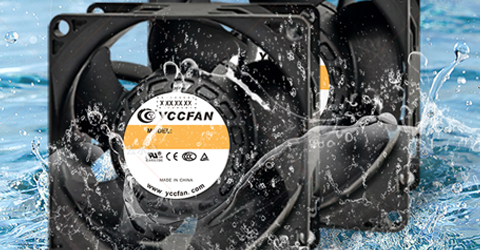




How to Choose an Industrial Fan: A Complete Guide
Introduction
Choosing an industrial fan begins with defining where the airflow is needed. A fan used for warehouse ventilation is selected differently from a compact cooling fan installed in a power supply, control cabinet, communication device or other industrial equipment.
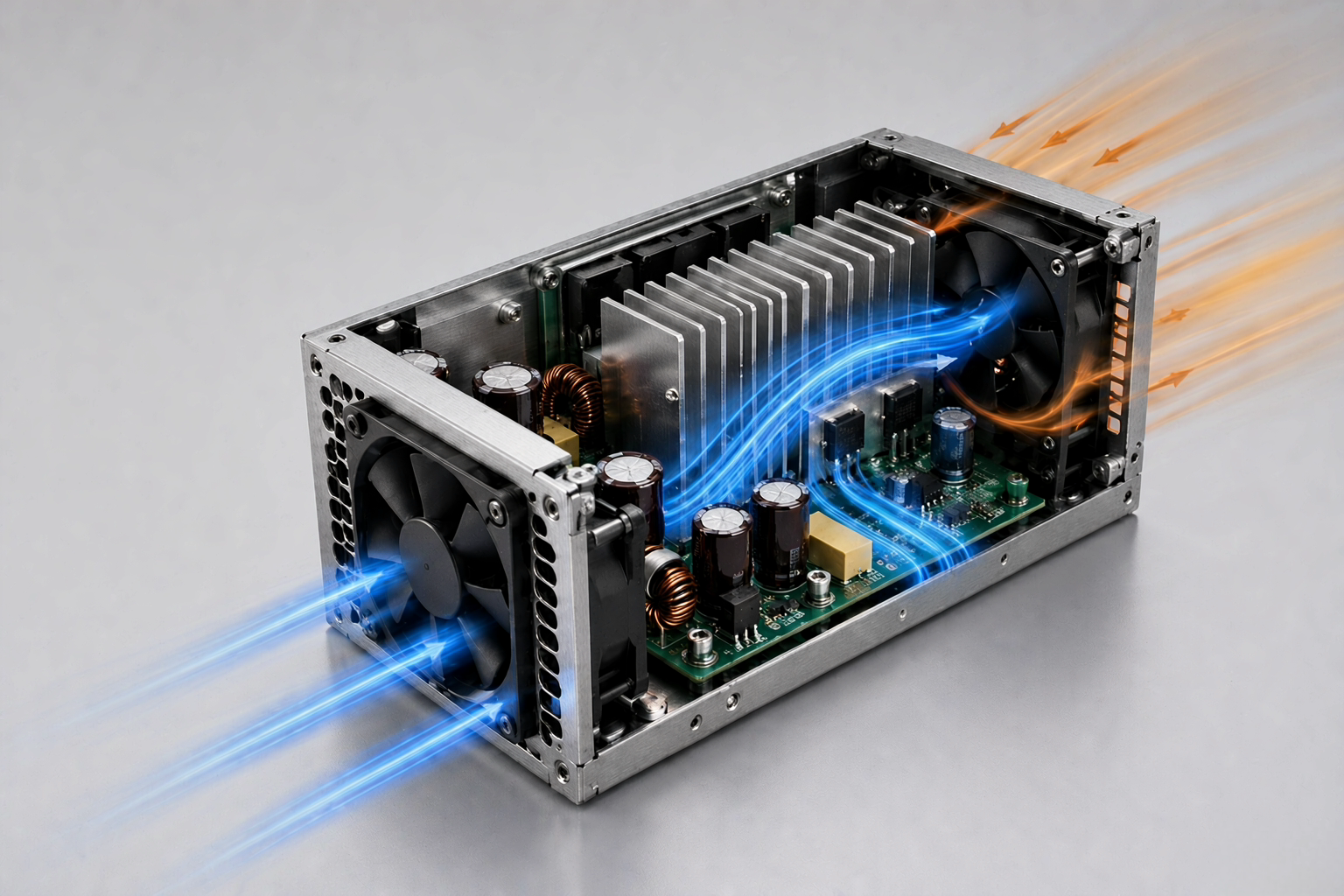
For equipment cooling, the fan must fit the available space, match the power supply and deliver sufficient airflow after resistance from heat sinks, filters, grilles and internal components is considered. Maximum airflow alone does not confirm that a fan will provide adequate cooling after installation.
This guide explains the main industrial fan types, the specifications that affect performance and the practical process for selecting an industrial cooling fan for equipment and OEM applications.
What Is an Industrial Fan?
An industrial fan is an air-moving device designed to support ventilation, heat removal, process airflow or equipment cooling under defined operating conditions. Compared with a household fan, it is normally selected according to measurable requirements such as airflow, static pressure, voltage, power consumption, operating temperature and duty cycle.
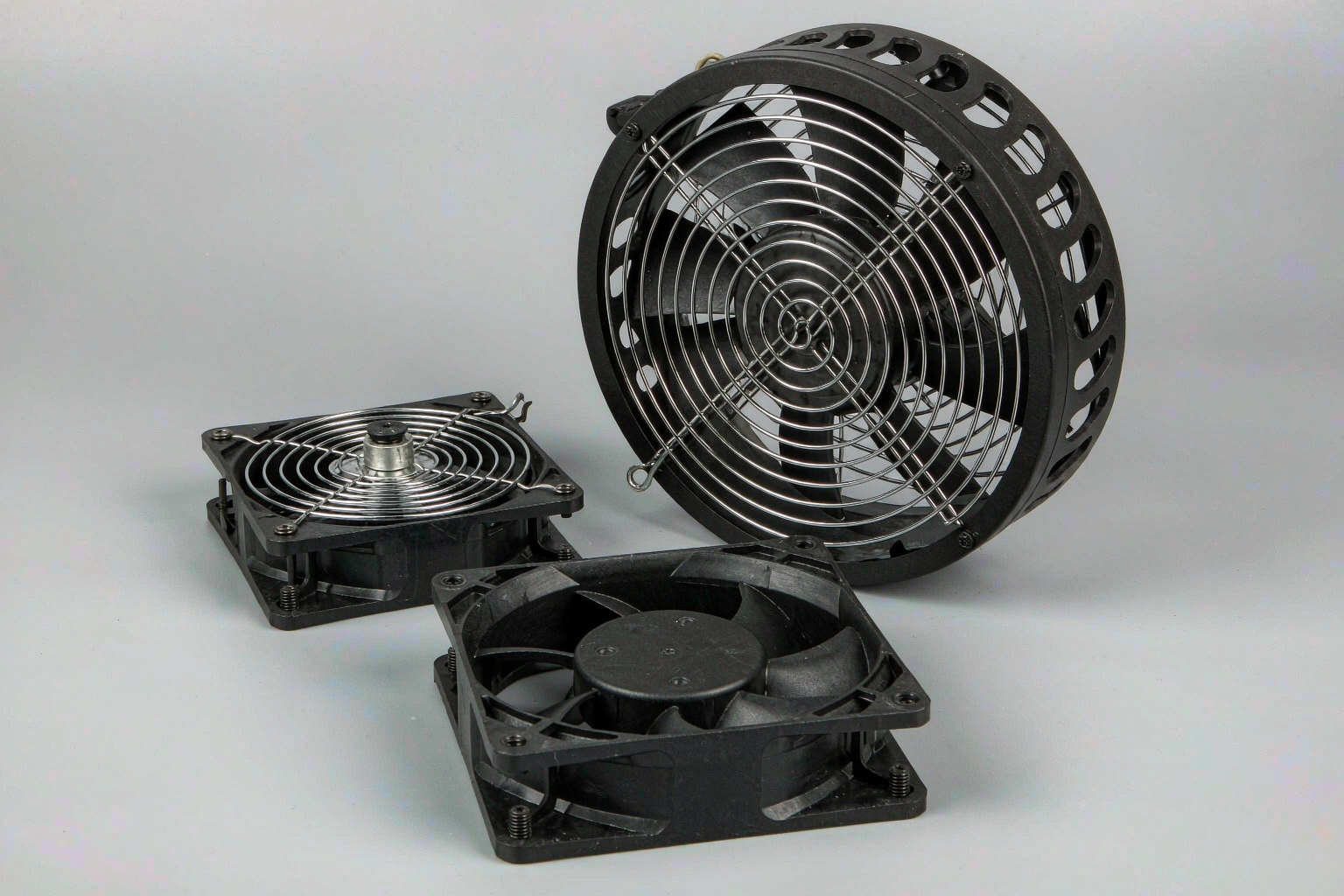
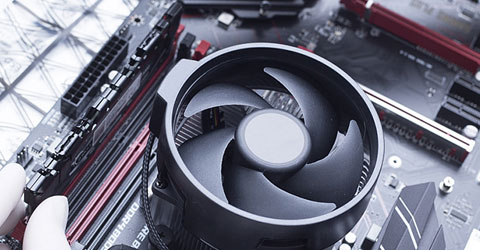
Industrial fans can serve two different application scales. Facility ventilation fans move air through warehouses, production areas, ducts and exhaust systems. Equipment-level industrial cooling fans are installed inside machinery and electronic products to remove concentrated heat or direct air through a restricted internal path.
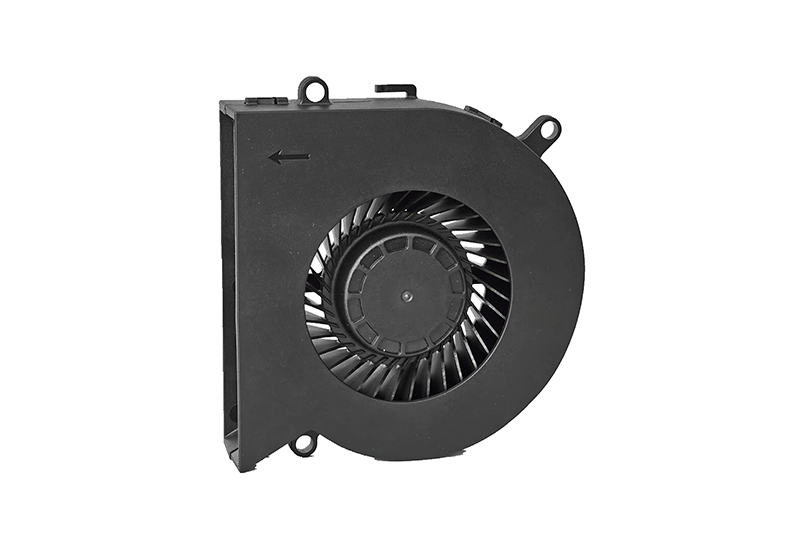
This guide focuses mainly on equipment-level cooling products used in power electronics, industrial controls, communication equipment, medical devices, automotive electronics and other OEM systems. Large ceiling fans, portable workplace fans and building exhaust systems require a different ventilation calculation and are not selected from the same specifications.
How Industrial Fan Types Are Classified
The types of industrial fans can be classified in more than one way. Axial and centrifugal describe how air moves through the fan, while AC, DC and EC describe the motor or power configuration. A product can therefore be both a DC fan and an axial fan.
Axial fans move air generally parallel to the motor shaft and are commonly used for higher airflow in low- or moderate-resistance paths. Centrifugal blower fans draw air through the inlet and discharge it through a defined side outlet, making them more suitable for focused airflow, filters, heat sinks and narrow internal channels.
AC fans operate from a compatible alternating-current supply. DC fans are widely used in electronic equipment and may support speed control or feedback functions. EC fans use electronically controlled motors and can provide adjustable operation according to the system design. Micro fans describe compact products and may use either an axial or centrifugal structure.
| Industrial Fan Type | Airflow Characteristic | Typical Use |
| DC axial fan | Straight airflow with relatively high volume | Power supplies, control cabinets and communication equipment |
| DC blower fan | Focused outlet with stronger pressure capability | Filters, heat sinks and narrow airflow channels |
| AC cooling fan | Direct operation from a compatible AC supply | Industrial cabinets and machinery |
| EC fan | Electronically controlled airflow | Systems requiring adjustable cooling |
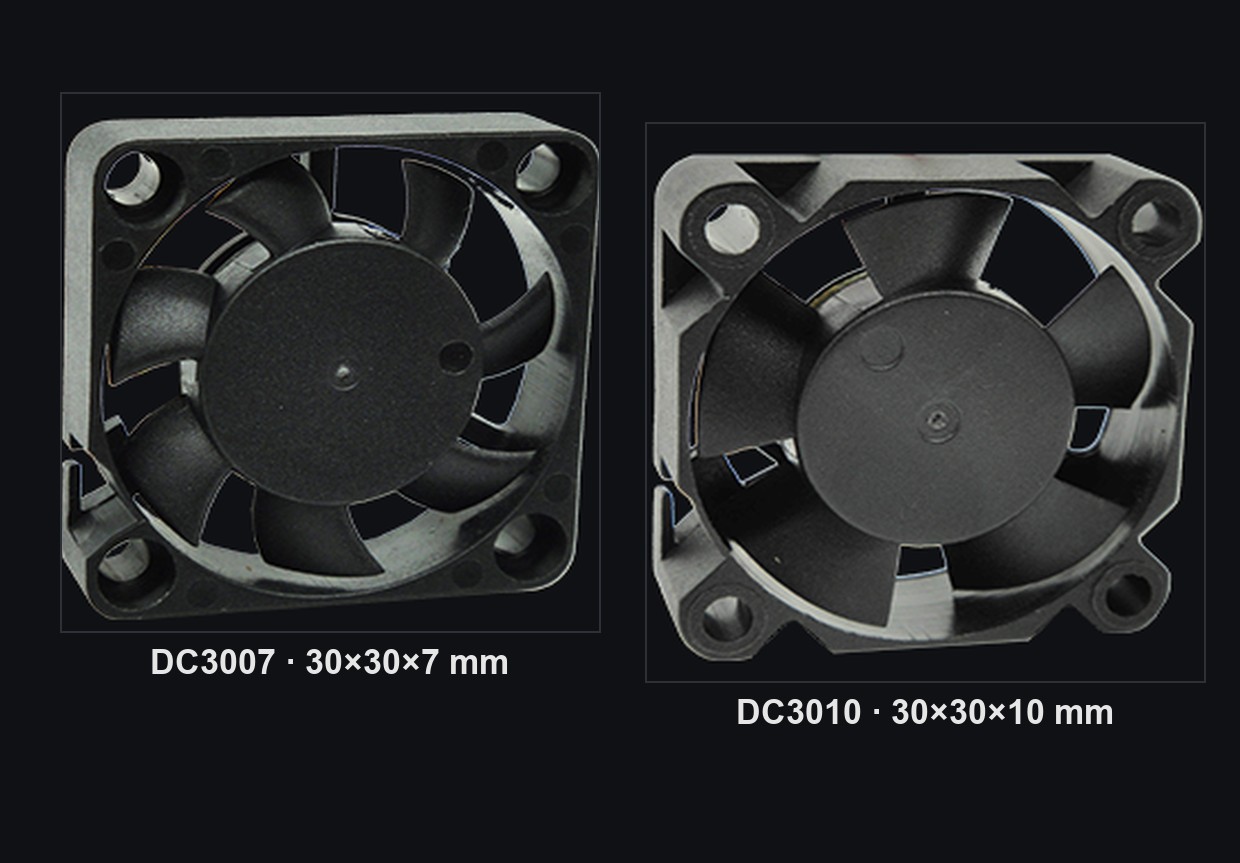
| Micro cooling fan | Compact localized airflow | Sensors and space-limited electronic equipment |
Industrial Fan Specifications to Consider
The most important industrial fan specifications should be evaluated as one system rather than as separate maximum values. Airflow, static pressure, size, electrical load, noise and operating environment all affect whether the fan can provide reliable cooling after installation.
Airflow Requirements (CFM)
One of the first considerations is the volume of air the cooling fan can move. Measured in cubic feet per minute (CFM), airflow determines how effectively heat is removed from your machinery, electrical systems, or workspace. Choosing a cooling fan with insufficient airflow can lead to overheating and faster wear of your equipment, while an oversized fan may result in wasted energy and higher operational costs. Airflow describes the volume of air moved over time and is commonly stated in CFM or m³/min. For equipment cooling, the airflow target should be based on the heat generated by the components, the allowable temperature rise and the path the air must follow through the enclosure.Maximum airflow is normally measured under low-resistance conditions. The value does not show how much airflow will remain after the fan is installed behind a grille, filter or heat sink.
Static Pressure and System Resistance
Static pressure shows how effectively the fan can maintain airflow against resistance. Filters, dense heat sinks, narrow vents, bends and restricted internal clearances all increase the pressure the fan must overcome.
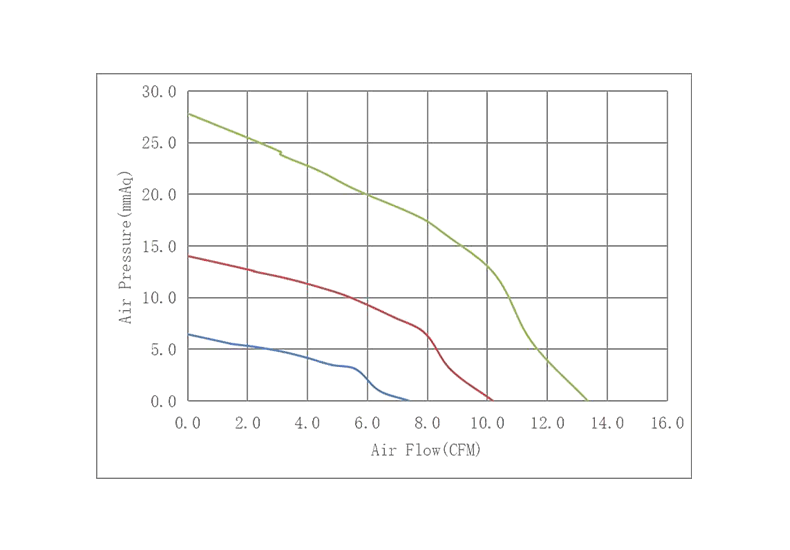
Maximum airflow and maximum static pressure occur at different ends of the fan’s P-Q curve and cannot be delivered at the same operating point. The correct model is the one that provides the required airflow at the expected system resistance.
Two industrial fans with similar free-air CFM may therefore perform very differently after installation. If system resistance is unknown, potential models should be compared through prototype testing in the actual equipment.
Choosing Axial Airflow or a Centrifugal Blower
Choose an axial fan when the equipment has a relatively direct airflow path and requires higher airflow at low or moderate resistance. Choose a centrifugal blower when air must pass through a filter, dense heat sink, narrow channel or defined side outlet.
The decision should be based on the complete airflow path rather than the fan name alone. An axial fan with suitable pressure capability may outperform a poorly matched blower in some systems, while a blower may maintain more useful airflow when resistance is higher.
Noise Level
Many industrial cooling fans produce significant noise, which can affect comfort and safety in the workplace. If your staff work near the fan or in indoor environments, it’s important to consider the decibel rating. Fans with low-noise designs or vibration-dampening features can help maintain a quieter, more comfortable environment without compromising the performance of your cooling fan.
Durability and Material
Industrial environments can be harsh, exposing fans to heat, dust, moisture, and chemicals. Choosing an industrial fan made from corrosion-resistant metals, high-grade plastics, or other durable materials ensures long-lasting performance. A robust design not only extends the lifespan of your cooling fan but also reduces downtime and maintenance costs, keeping your operations running smoothly.
Power and Efficiency
The energy consumption and motor specifications of your fan are critical considerations. High-efficiency industrial fans deliver reliable airflow while minimizing electricity usage. Ensure that the motor power and voltage requirements of your cooling fan match your facility’s electrical system to avoid overloading and maintain operational efficiency.
Temperature and Environment
Not all fans are built for the same conditions. Some industrial fans can handle extreme heat, high humidity, or exposure to dust and oil. Selecting a fan designed to withstand your specific environmental conditions ensures consistent cooling and prevents potential performance issues over time.
Maintenance and Accessibility
Finally, think about how easy it will be to maintain your cooling fan. Fans with accessible blades, removable filters, or modular components simplify cleaning and repairs, reducing downtime and maintenance costs. Regular upkeep not only extends the life of your industrial fan but also keeps your cooling system functioning at peak performance.
Steps to Choose an Industrial Cooling Fan
Selecting the right industrial cooling fan doesn’t have to be overwhelming. By approaching the process step by step, you can make sure your fan meets your operational needs, suits your environment, and provides reliable cooling for the long term.
Assess Your Cooling Fan Requirements
Start by identifying which equipment, workstations, or areas require cooling. Take precise measurements of the space and calculate the heat output generated by your machinery or electrical systems. Understanding these factors helps you determine the airflow capacity your cooling fan must deliver. Choosing a fan that matches your needs ensures efficient heat dissipation without overloading the system or wasting energy, keeping both your equipment and workplace comfortable.
Choose the Right Type of Industrial Fan
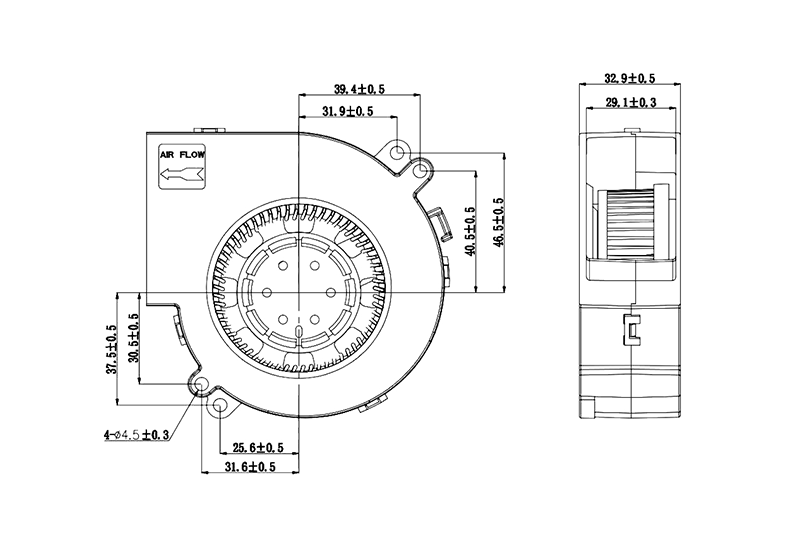
Next, consider the type of industrial fan that best suits your application. Axial fans are perfect for moving large volumes of air in open spaces with low resistance. Centrifugal fans are ideal if you need higher pressure airflow to navigate ducts or enclosed systems. Blower fans concentrate airflow for precise, targeted cooling of specific equipment or localized areas. Picking the correct type ensures your cooling fan delivers air exactly where it’s needed, maximizing efficiency.
Evaluate Material and Build Quality of Your Cooling Fan
The environment where your industrial fan will operate plays a crucial role in selecting the right materials. Exposure to heat, dust, moisture, or chemicals demands a fan built from corrosion-resistant metals, reinforced plastics, or other durable materials. A high-quality construction not only guarantees reliable performance but also reduces the frequency of repairs and prolongs the life of your cooling fan, saving time and maintenance costs.
Verify Power Requirements and Energy Efficiency
Consider the motor specifications and energy consumption of the industrial cooling fan. High-efficiency fans provide consistent airflow while minimizing electricity usage, which is especially important for facilities with multiple units running continuously. Make sure the fan’s power and voltage match your facility’s electrical system to avoid overloading circuits and maintain sustainable, cost-effective operation.
Consider Noise Levels and Vibration Control
Noise and vibration can significantly affect workplace comfort and safety. Evaluate the acceptable sound levels for your workspace and look for industrial fans designed with low-vibration features or sound-dampening components. Choosing a fan that balances performance with quiet operation ensures your staff can work comfortably without compromising the effectiveness of the cooling fan.
Plan for Maintenance and Accessibility
A fan is only effective if it’s easy to maintain. Opt for a cooling fan with accessible blades, removable filters, and modular components. This design simplifies routine cleaning, inspections, and repairs, reducing downtime and ensuring your fan continues to operate efficiently over time. Regular maintenance also helps maintain consistent airflow and prolongs the fan’s overall lifespan.
Ensure Safety and Compliance
Finally, check that your industrial fan complies with relevant safety standards and industry certifications. A fan that meets these requirements protects both your equipment and personnel, ensuring your cooling system operates safely and reliably. Compliance also provides peace of mind, knowing your cooling fan meets regulatory expectations in your region.
When Does an Industrial Fan Need Customization?
A standard industrial fan may be suitable when its size, operating point, voltage, noise and control functions already match the equipment. Customization becomes relevant when an available model cannot meet an essential mechanical, electrical or environmental requirement.
Common project requirements include a specific wire length, connector, terminal sequence, speed range, PWM input, feedback signal, protection function or mounting arrangement. Before developing a new design, engineers should also determine whether the enclosure vent, heat-sink position or airflow channel can be adjusted to use an existing model.
When sourcing a specialized industrial fan, buyers should provide an installation drawing, required airflow, estimated system resistance, supply voltage, current limit, noise target, operating temperature, control requirements and expected annual quantity. Clear technical inputs help the supplier determine whether a standard model, modified product or new design is appropriate.
How YCCFAN Supports Industrial Fan Selection
YCCFAN provides DC axial fans, DC blower fans, AC fans, EC fans and micro cooling fans for industrial equipment and OEM applications. Available options cover different installation sizes, airflow and pressure ranges, voltage configurations, bearings and control requirements.
Model evaluation should consider the installation space, airflow path, static pressure, electrical load, acoustic target and operating environment together. Functions such as PWM, FG, RD, auto restart and polarity protection can be evaluated according to the selected fan and equipment controller.
For a model recommendation, provide the available dimensions, airflow target, estimated system resistance, voltage, noise limit, operating temperature, control functions and expected quantity. Sample testing in the actual equipment is recommended before final production selection.
Industrial Fan Selection FAQ
What are the main types of industrial fans?
Industrial fans can be classified by airflow structure and power configuration. Axial fans and centrifugal blowers describe how air moves, while AC, DC and EC describe the motor or power type. Micro fans are compact products that may use either an axial or centrifugal structure.
How do I choose the right industrial fan?
Choose an industrial fan by confirming the installation space, required airflow and expected system static pressure first. Then compare the fan structure, voltage, current, noise, bearing, operating temperature and control functions. Final performance should be tested in the actual equipment.
What is the difference between an axial fan and a blower fan?
An axial fan moves air generally parallel to the motor shaft and is suitable for more direct, lower-resistance airflow paths. A centrifugal blower discharges air through a side outlet and is commonly used when airflow must pass through filters, heat sinks or narrow channels.
Is higher CFM always better for industrial cooling?
No. Maximum CFM is measured under very low resistance and does not show how much airflow remains after installation. The correct fan must provide the required airflow at the static pressure created by the actual equipment.
What information does YCCFAN need to recommend an industrial fan?
YCCFAN needs the available fan dimensions, airflow target, estimated static pressure, voltage, current limit, noise requirement, operating temperature, control functions and quantity. An equipment drawing or airflow-path description can improve the recommendation.
Conclusion
Selecting the right industrial cooling fan is more than just picking a model off the shelf. By carefully assessing your airflow requirements, fan type, materials, energy efficiency, noise levels, and maintenance needs, you can ensure reliable cooling, protect your equipment, and create a safer, more comfortable work environment.